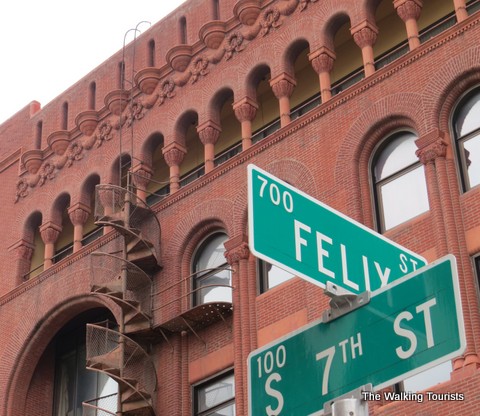
Sculptures, architecture highlight St. Joseph downtown
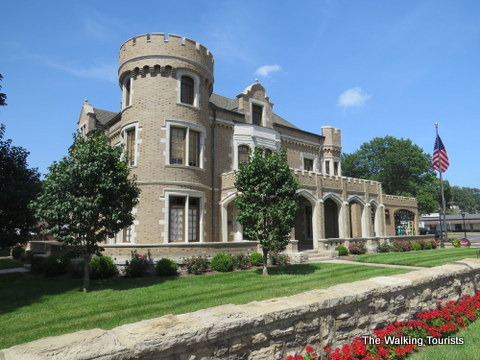
St. Joseph’s downtown offers a lot of architecture history to enjoy. We took a couple of strolls through the downtown area, taking in the sights. Along the way, we tried to spot as many sculptures as we could on the city’s Sculpture Walk, a local downtown art project.
During its heyday, the city was on the fringe of the frontier. Merchants, such as Townsend –Wyatt, catered to the pioneers heading west. They sold their wagon supplies, household goods, and clothing. St. Joseph was the last stop for many before they launched their trips west.
The JC Wyatt House, now a fine-dining restaurant, was the home for one of the partners. The house was on the edge of the business district.
We walked around the area of Third Street, checking out older buildings.

The current Home Style Furniture and bedding store stands on a corner in an older building.
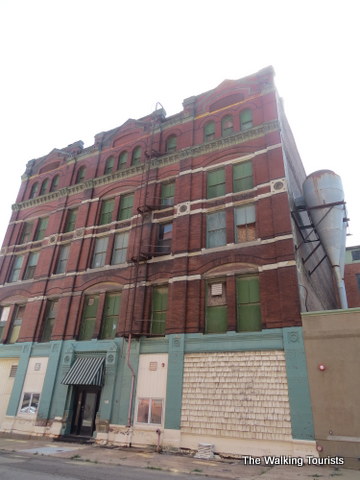
Next door were a couple of abandoned buildings. It looks like someone tried to operate a business in one of the buildings, but has moved on. It had some cosmetic work done on the exterior. It would be nice if someone could step up and take it over, refurbishing the exterior to its original look.
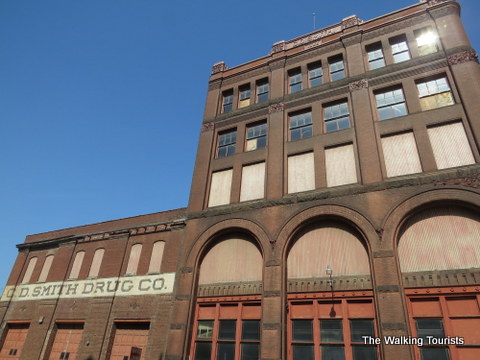
Across the street was the CD Smith building. The building was also empty, sadly. It looks like it could be a great spot for an office set-up or refurbished apartments.
The nearby city park is home to the Journeys West statue. It highlights a pioneer’s family move westward. The statue features a riverboat captain at the helm, the pioneer husband and wife, a Native American and an African-American.

A cool building to check out is the Missouri Theater. It was an old movie house, but is now home to community theater.
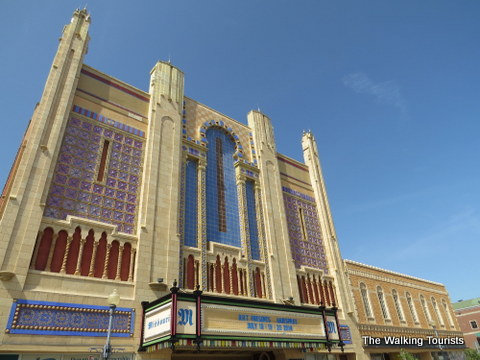
The interior was fascinating. We sneaked in while an acting group was meeting. They were kind enough to let us check out the design work.
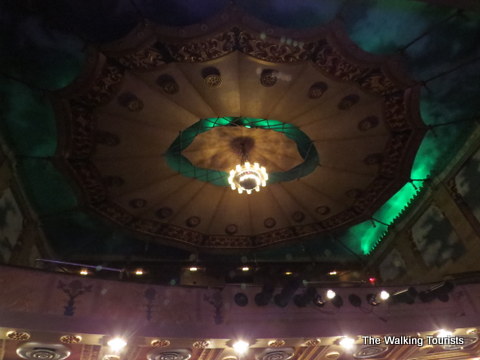
It has an Egyptian motif. The ceiling looks like a large sun. The walls have sphinx and columns. Very cool.
Outside the theater is a sculpture called “Two-faced Monolith.” The piece, by artist Matthew Zuppnick of Warrensburg, Mo., uses historical events, current world affairs, human interaction and the environment as its inspiration, according to the art council (www.stjoearts.org).
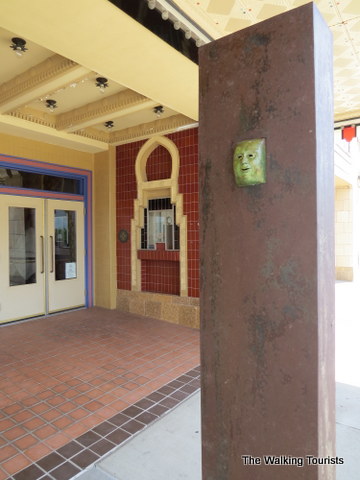
The downtown Sculpture Walk is a first-year project by the Allied Arts Council. The sculptures accentuate the architecture of the buildings, so it’s a great fit.
When we started our tour of the sculpture walk, we saw “Iron Butterfly,” by Matthew Burke.
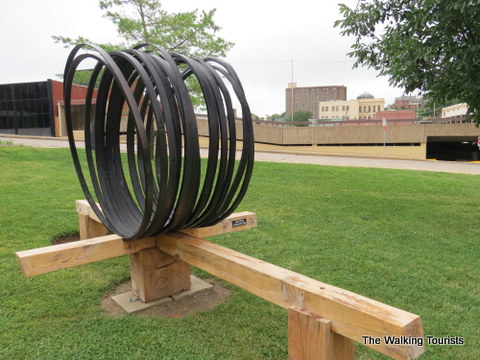
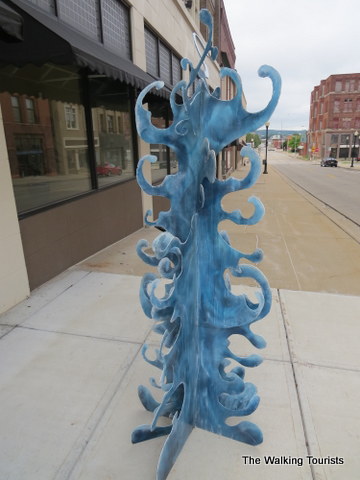
A sculpture representing water, “Big Blue,” stands near the corner of 7th and Felix streets. All of the sculptures are within walking distance of each other downtown.
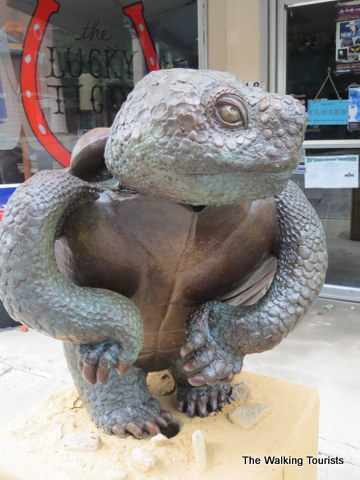
“Poco a Poco Se Va Lejos” is a turtle sculpture standing in front of Lucky Tiger store. The tortoise represents the “The Tortoise and the Hare.” The piece was created by Pokey Park of Tucson, Arizona.
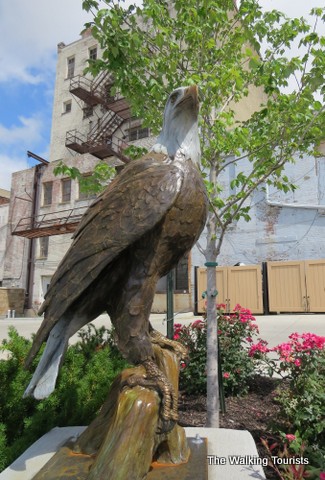
My favorite piece was a bronzed eagle called “Heritage.” “Drawing inspiration for my work from the beauty and grace of the natural environment, I strive to reflect this in my paintings and bronze sculptures, so the viewer can evoke a memory, emotion, or share in a captured moment in time,” said Tim Norman, the artist from Eugene, Ore (per www.stjoearts.org).
For more information on these and the rest of the 14 pieces, please visit the arts council website.
The downtown sculpture walk isn’t the only place to get a great view of statues.
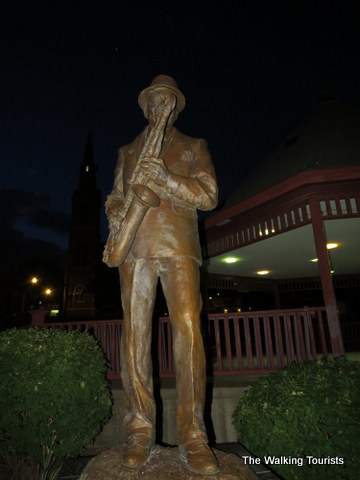
Coleman Hawkins was a great musician from St. Joe. He is remembered with a statue in the downtown park named after him. I could see it as one of the most popular spots in the city for photographs.
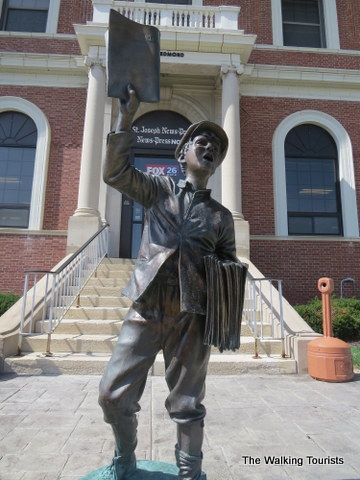
A personal favorite is the Newsie sculpture outside the local newspaper and TV station building.
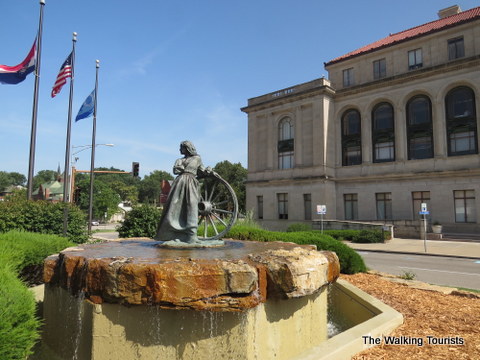
City Hall is home to a host of sculptures and memorials.
In front of City Hall, a sculpture depicting a pioneer woman looking ahead stands atop a fountain.
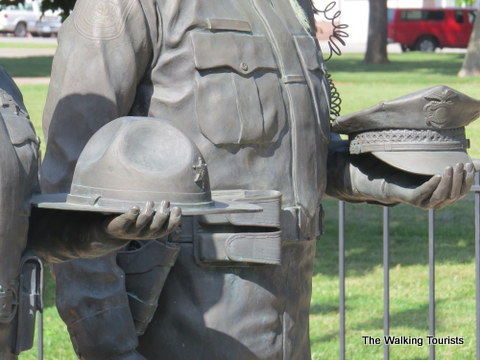
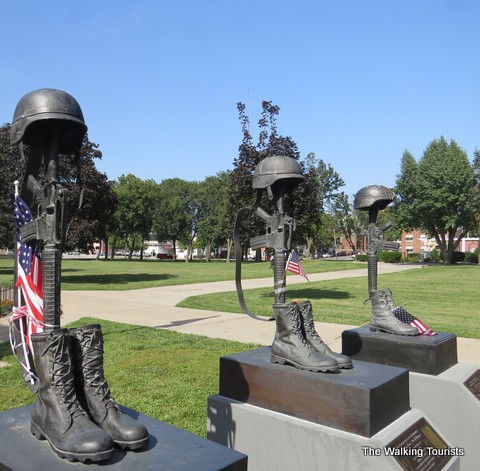
Behind the building, in a courtyard, memorials to fallen heroes can be seen.
The police memorial shows two peace officers paying tribute to their fellow officers, who lost their lives in public service. Names of the fallen officers are located on bricks along the edge of the memorial.
Three markers stand, saluting local men who have died in the recent Middle Eastern conflicts.
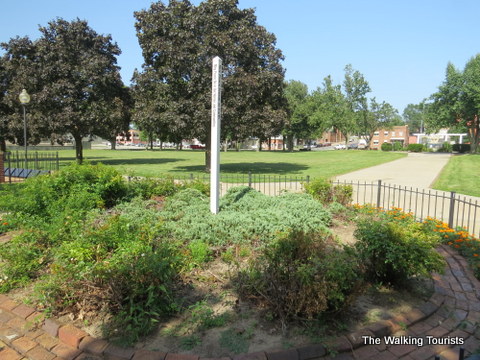
Hope for the future seems to be the message of the Peace Garden, with its plants. The marker has a simple background of white paint with the words “Peace Garden.”
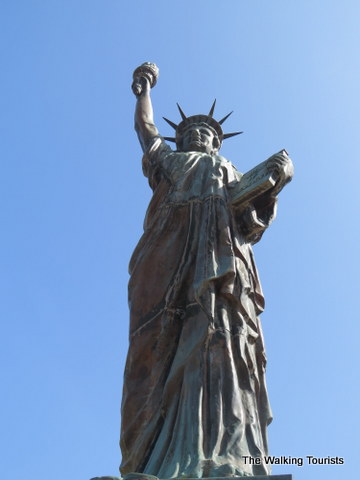
Across the street is a small version of the Statue of Liberty, dedicated by the Boy Scouts.
Last, but not least, may be the most recognizable icon of St. Joe – the Pony Express rider. The sculpture stands high downtown for all to see. In fact, during our visit, a family stopped by to have a family portrait taken in front of it.

St. Joe is so much more than the Pony Express and Jesse James. It has a history that can be told through its buildings and sculptures. It is historical, but modern. It’s a great city to visit, and the city’s art (including architecture) provides a great attraction.