


Graceland: Remembering Elvis

Most people in their mid-60s and older likely remember the day Elvis Presley died – Aug. 16, 1977.
I recall my eldest sister coming over to our house that evening to watch a special on TV about his life and death. I remember how emotional she was. Elvis had that effect on people.
Elvis performed in Omaha, about two months before his death. His concert here was filmed, along with a show in Rapid City, SD, two days later for a planned special on CBS that fall. The show, “Elvis in Concert,” aired in October 1977, about two months following his death. His actual last concert was in Indianapolis, June 26.

Elvis was the true American music icon. He WAS the “King” of Rock ‘n’ Roll. He could sing rock, pop, gospel, country and soul, and people would faint over him.
Even being an Elvis tribute artist (imitator, back in the day) is a major career move for some people. We watched a performance in Omaha featuring three Elvis tribute artists. Women reacted to them like they were actually Elvis.
During a trip to Memphis, we toured Graceland. Elvis bought the 23-room mansion in 1957, at the age of 22. He spent $100,000 for the house and the land. He lived there until his death. His parents, wife Priscilla and daughter Lisa Marie also spent time living there. Elvis and Priscilla eventually divorced.
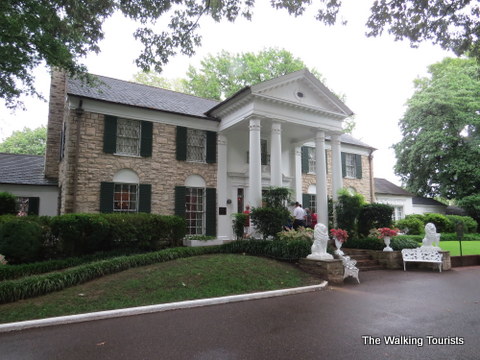
Graceland was opened to the public in 1982. Since its opening, the mansion and surrounding exhibits have averaged 600,000 visitors annually.
The Graceland mansion is part of a larger complex honoring the King. Graceland Plaza features museums, restaurants, gift shops and his two personal airplanes.

Starting our Elvis experience with the mansion tour, visitors take a shuttle bus from the complex entrance to Graceland. The tour is well-organized and keeps people moving along, aided by an audio presentation on a tablet, narrated by actor/singer John Stamos.
As you drive through the gate, with music notes design, you notice that the house doesn’t look too large. The main structure is fairly small, but there are additions to each side.
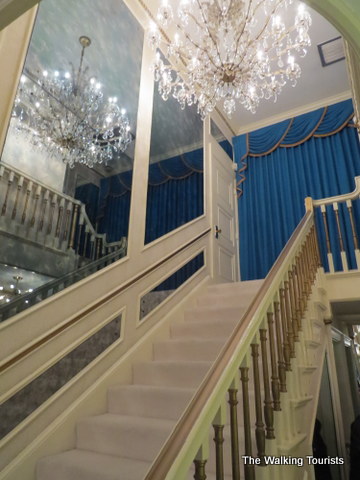
The entrance to the mansion allows a view of the living room. A portrait of Elvis hangs on the wall. Guests would wait in the foyer for Elvis to greet them. The living room has a 1960-70s décor.
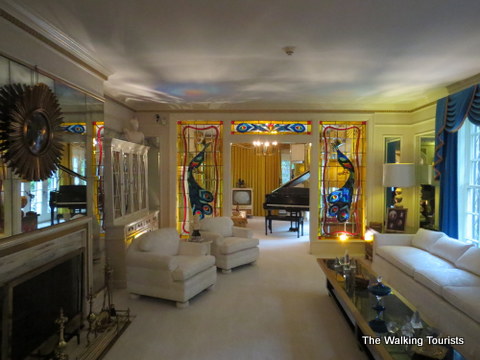
Next to the living room is his mother’s bedroom.
The dining room was well-decorated and maintained.

Next to it was the kitchen.

Heading downstairs, the media room featured several televisions.

Next to it is the famous Jungle Room. In the song, “Walking in Memphis,” Mark Cohn refers to seeing the ghost of Elvis there: “…there’s a pretty little thing waiting for the King and she’s down in the Jungle Room.”

The Jungle Room features green shag carpet. It has a Polynesian décor and carved wood. It was once the exterior access to the basement, and later a screened porch. It was Elvis’ favorite room, because it reminded him of Hawaii, which was one of his favorite vacation areas.
Nearby, a pool room features a unique interior design, from floor to ceiling.

A few steps outside the house was his dad’s office. This is where Vernon Presley managed Elvis’ personal business. The professional career was managed by Colonel Tom Parker.
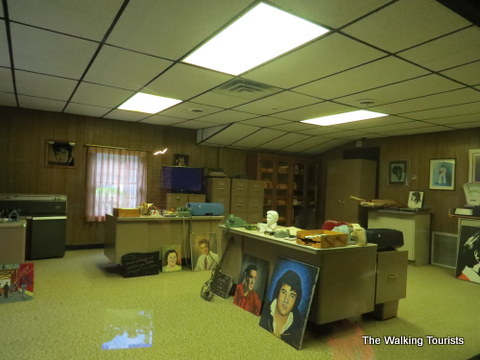
The Trophy Building houses a collection of Elvis’ gold and platinum records. Records line the walls.

Elvis had 48 Top 20 hit songs, including 30 to reach No. 1 on the charts. Among his hit songs were “Burning Love,” “All Shook Up,” “Return to Sender,” “In the Ghetto,” “Suspicious Minds,” “Can’t Help Falling in Love” and “A Little Less Conversation.”
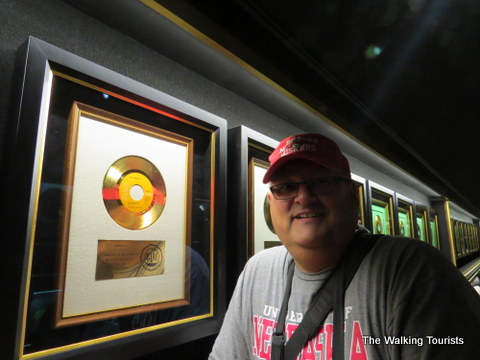
There are also movie posters and outfits Elvis wore. Priscilla’s bridal gown is on display.

The Racquetball Room is full of more awards and outfits.

A special item was the tri-folded American flag given to the family when a veteran passes away. Since Elvis served in the Army, Lisa Marie was offered the flag on behalf of a grateful nation (for many reasons).

Elvis enjoyed hanging out in a studio-style room, where he performed a couple of songs for friends, while playing the piano, on the day he died.
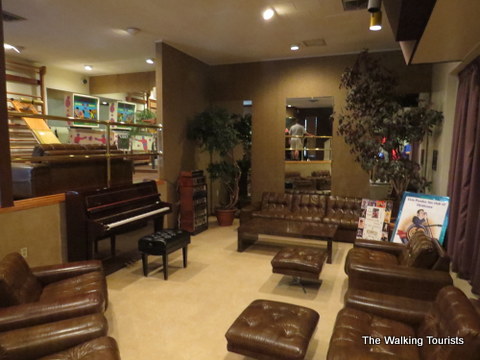
The last stop on the mansion tour was the Meditation Garden. This marks the burial spot for Elvis, his parents and grandmother. Lisa Marie Presley and her son, Brandon Keogh, are also buried there. A memorial for his brother – who died in childhood and was buried in Tupelo, Mississippi – is located next to his mother’s grave.

The Elvis Archives at Graceland has thousands of pieces of memorabilia that cannot be displayed on a regular basis. Visitors on the VIP and Platinum tours can attend a short presentation on some of the items, including a “cell” phone in a briefcase used by Elvis.
Afterward, visit the plaza, and check out some of the other museums and exhibits.
The automobile museum houses more than 20 vehicles that belonged to Elvis. The museum is set up like you’re walking along a street and see the vehicles off to the side.
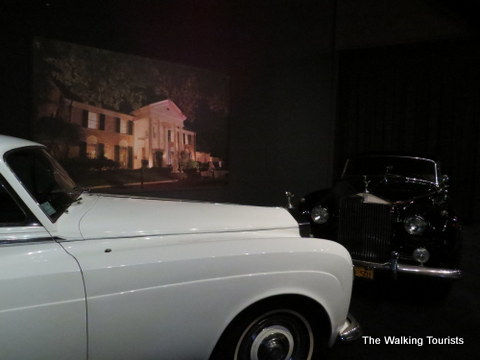
A drive-in features a couple of vehicles.

Visit an old-time gas station exhibit along the walk.
Prominently featured is a pink Cadillac that Elvis drove, but later gave to his mom.
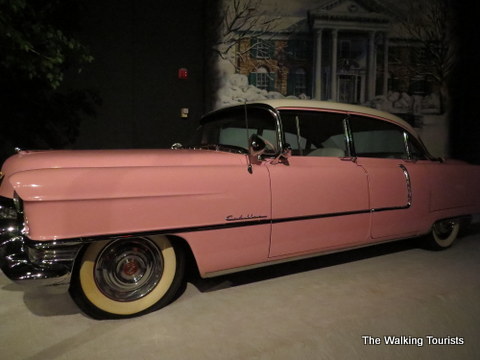
Some interesting “toys” are on display, including motorcycles and go-karts. Elvis even had a snowmobile fitted with wheels, so he could drive it around the property.

Outside the automobile museum, several side exhibits and gift shops line the attraction entrance.
Want to see Elvis’ Tupelo (his hometown)? Head on in. Elvis in Vegas offers visitors a look at outfits he wore during shows there. Elvis’ Hawaii allows a look at why he loved the state so much for vacations, movie locations and concerts.

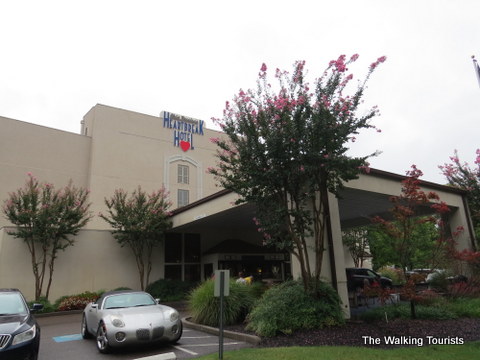
Next door to Graceland, the Heartbreak Hotel was hopping with guests.
We spent almost three hours at Graceland and its attractions.
For more information on visiting Graceland, please visit graceland.com.
Disclaimer: Thanks to the Memphis Convention and Visitors Bureau for the complimentary tickets. However, all opinions and views are ours.
