


‘Peanuts’: Hallmark, St. Paul share a Midwesterner’s animated story of childhood
Whether it’s Snoopy the World War I flying ace taking on the infamous Red Baron in the skies above France or Lucy pulling the football away, just as Charlie Brown began his kicking motion only to fall flat on his tush, the “Peanuts” comic strip has entertained millions of fans over the years.
“Peanuts” celebrated its 75th anniversary in 2025. Debuting October 1950, in seven newspapers nationwide, the comic strip appeared in more 2,500 newspapers in 75 countries during its height of popularity.
The comic strip went on to television and theater popularity, with 22 animated specials and movies, including 1965’s “A Charlie Brown Christmas,” “A Charlie Brown Thanksgiving,” “It’s the Great Pumpkin, Charlie Brown” and “A Boy Named Charlie Brown.”
Hallmark exhibit
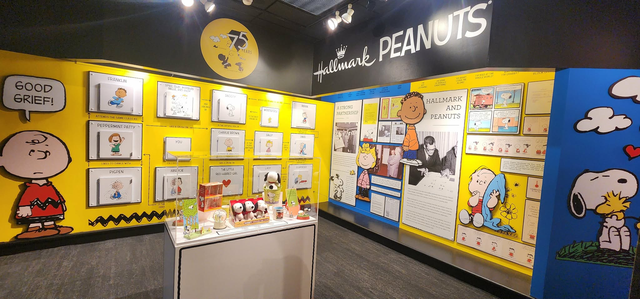
Hallmark’s Visitors Center at Kansas City’s Crown Center Mall honors the legendary cartoon characters with a special exhibit. “Peanuts” and Hallmark have enjoyed a special relationship for more than 65 years.
While it enjoys a successful business venture with Disney and other outlets, “Peanuts” is Hallmark’s longest-running relationship.
From greeting cards and Christmas ornaments to plush toys and figurines, “Peanuts” helped solidify Hallmark’s standing as THE greeting card company.
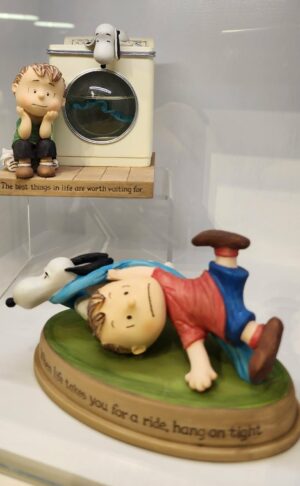
The Hallmark Visitors Center’s exhibit shares the story behind “Peanuts,” as well backgrounds on some of the major characters. There are currently no plans to replace the exhibit. Rather, it will evolve with seasonal changes from Hallmark’s archives.
“Peanuts” was basically a story about a boy, his friends and his pet dog. But, it was so much more. At a deeper level, it explored society, relationships, even mental health.
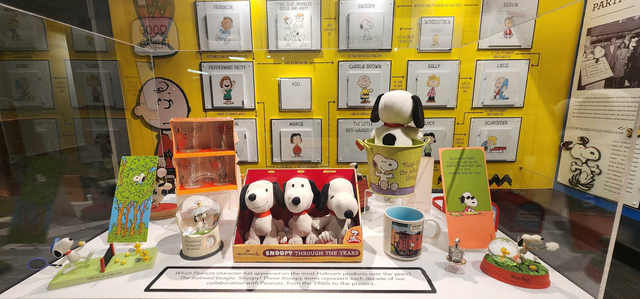
The series focused on kids. We never saw the adults, only the unintelligible words of them, such as a teacher’s famous “Wah, Wah.” What adults said didn’t matter. “Peanuts” was about the kids. Charlie Brown. His sister, Sally. Lucy Van Pelt and brother, Linus, Charlie Brown’s best friend. Schroeder was a master pianist, at least to his friends. Don’t forget the cute Little Redheaded girl, supposedly based on Schulz’s wife and the focus of Charlie Brown’s unrequited love.
Societal influences
Whether or not he intended it, Schulz created characters that impacted society. Franklin Armstrong (we learn his last name 30 years after his introduction) and Charlie met at a beach in 1968. Franklin’s father was serving in Vietnam at the time.
Franklin was the first African-American character in “Peanuts,” and only the second character of color. Jose was introduced a year earlier. Franklin’s addition not only addressed racial relationships by just showing that kids are kids and don’t explicitly practice racism, it also introduced children to the Vietnam War.

Peppermint Patty and Marcie enjoyed a specially close bond. While Peppermint Patty and “Chuck,” as she called Charlie Brown, became good friends, Marcie also had a crush on Charlie Brown.
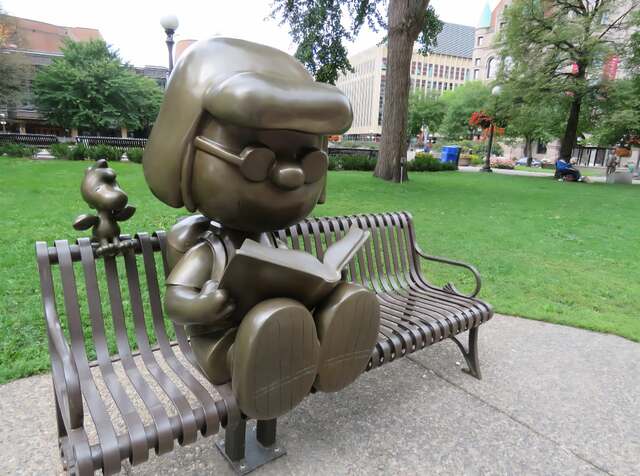
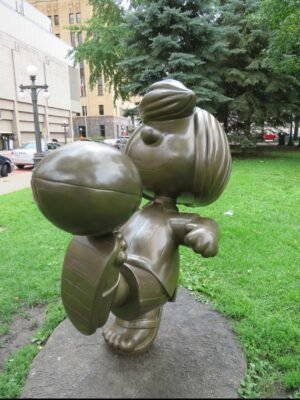
Peppermint Patty was a tomboy, who was better at sports than most of the other children, and a bit of a hippy (the sandals were a dead give-away. Trust me on this). Schulz, it has been noted over the years, quietly supported desegregation, women’s rights and equality for all people.
Mental health, either intentional or not, was addressed through Charlie Brown’s obvious depression, anxiety and need to be accepted. We’ve all been there. Linus’ security blanket was a symbol for dealing with anxiety and possibly attachment issues. Lucy’s role as a “therapist” truly was worth only a nickel. Her method was more “Dr. Phil” or “Dr. Laura” than a true therapist.
You may be thinking, “Tim, you’re an idiot. ‘Peanuts’ was nothing more than a guy’s humorous look at childhood.” You may be right. I may be crazy. Though, my therapist says otherwise. I have a tendency to look at things more deeply than a few other people I know.
Hometown recognition
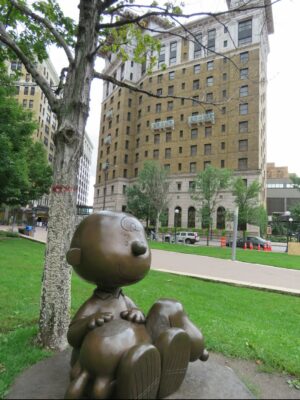
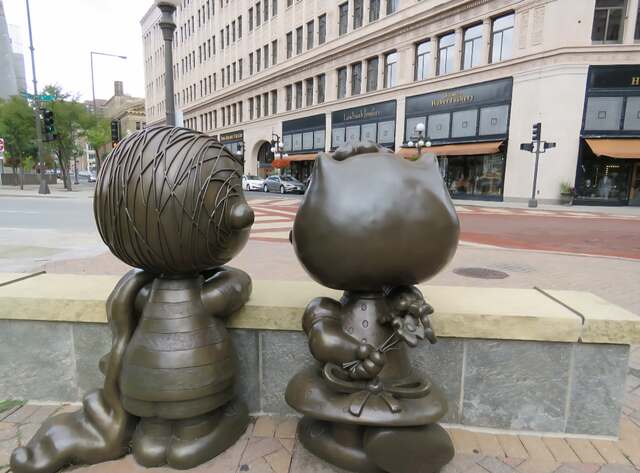
While Hallmark celebrates “Peanuts” with its display, Schulz’s hometown of St. Paul, Minnesota, honors him with a series of sculptures at Landmark Plaza and Rice Park.
Schulz lived in St. Paul for most of his youth, except for a year, when the family moved to California. He loved comics from early childhood, earning his nickname, “Sparky,” from a comic featuring a racehorse.
Schulz’s father encouraged his love for comic strips, buying both the St. Paul and Minneapolis newspapers, so they could enjoy the comics. One of the first newspapers to carry “Peanuts” was the Minneapolis Star Tribune.
Schulz acknowledged during interviews with several outlets that “Peanuts” was based on his childhood dog.
While Schulz was a Minnesotan, the Charles M. Schulz Museum and Research Center in Santa Rosa, California, recognizes his life and career.
Regardless of the social influences of “Peanuts,” it was an entertaining ride created by a genius artist and storyteller. Schulz drew the comic strip until 1999, when he was diagnosed with colon cancer. His final strip ran in February 2000, the day after his death at the age of 77.
